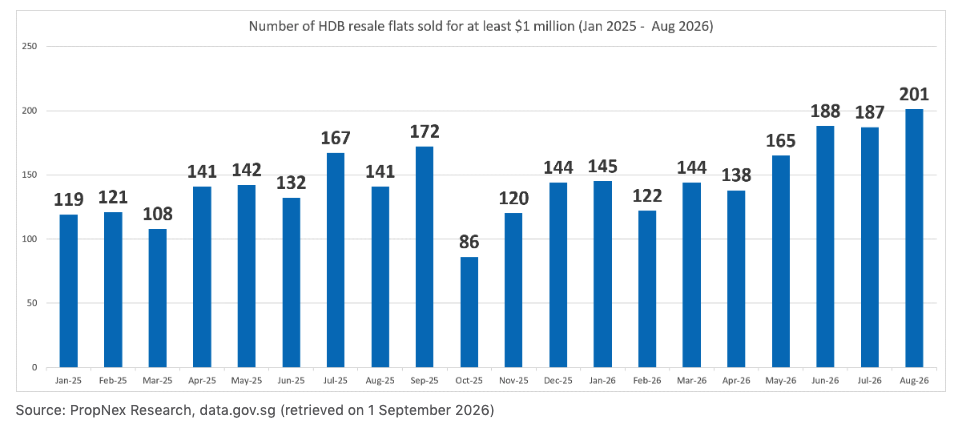
- 201 flats sold for at least $1 million, up from 187 in July
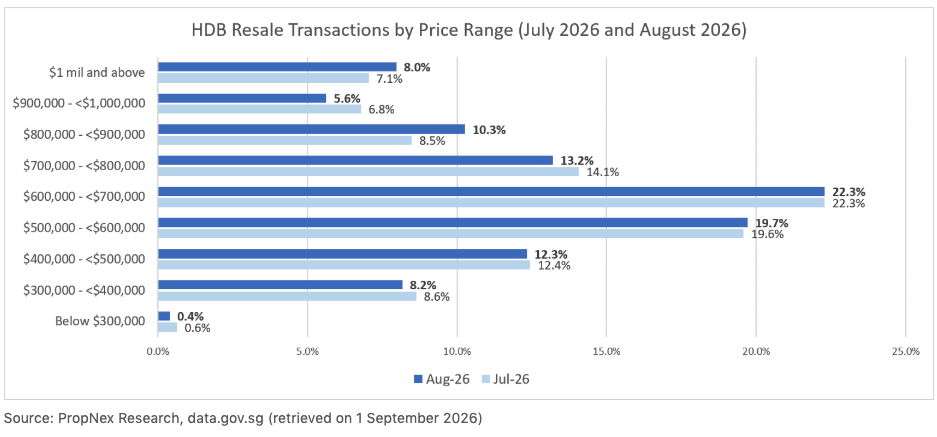
- Million-dollar flats formed 8% of all resale transactions
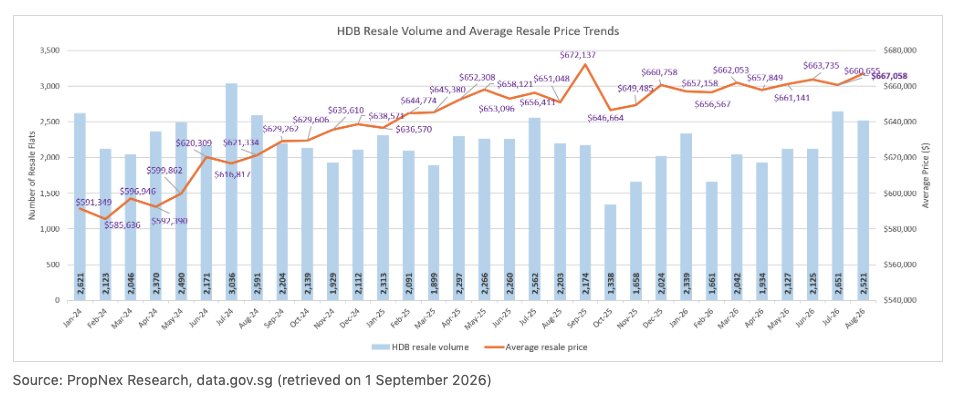
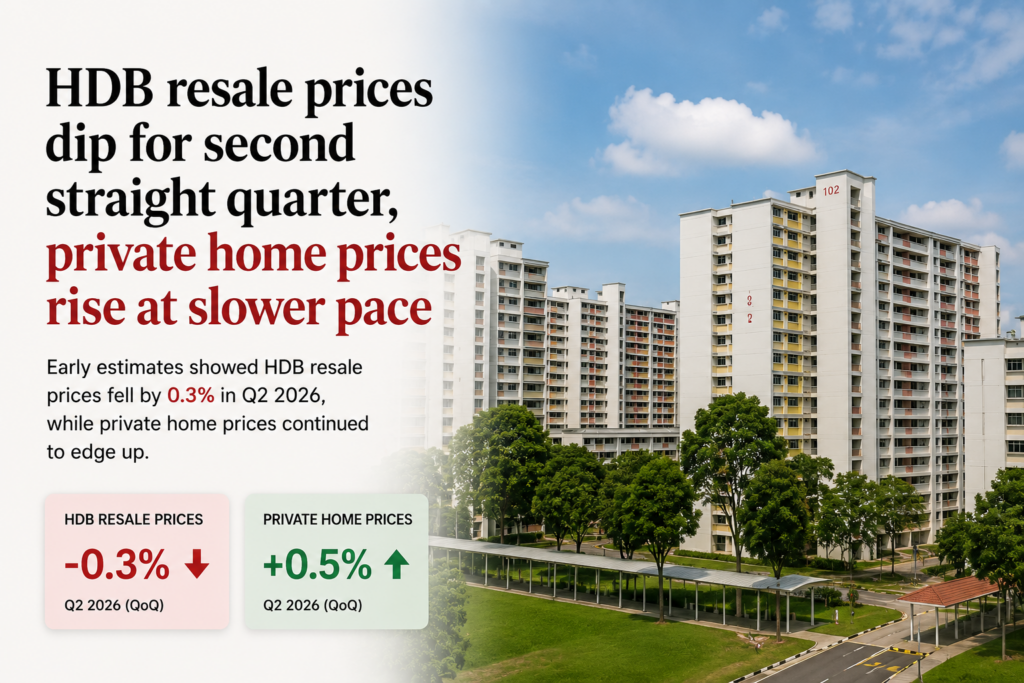
- Overall resale prices increased by 0.1% month-on-month
- 2,524 resale flats changed hands, 5.1% fewer than in July
- Mature-estate prices rose by 0.7%, while non-mature-estate prices were stable
- Executive flat prices rose by 2.8%, the strongest movement among flat types
- The highest-priced transaction was $1,688,888 for a five-room flat at Tiong Bahru View
These figures are based on registered resale applications. They provide a useful view of the market, but they should not be treated as a valuation of any individual home.
A record at the top does not mean the whole market is booming

The most important pattern in August was not simply the number of million-dollar flats. It was the gap between the premium segment and the overall market.
At the top end, buyers continued to pay for homes with attributes that are difficult to replace: larger layouts, younger leases, high floors, convenient locations, strong transport links and limited competing supply.
Across the rest of the market, price movement was far more restrained. Overall prices were also 0.5% lower than in August 2025, even though resale volume was 14.1% higher year-on-year.
This tells us that demand is still present, but buyers are not accepting every asking price indiscriminately. They are differentiating between ordinary supply and homes that offer something scarce.
That distinction matters because headline records can change seller expectations very quickly. An owner may see a million-dollar transaction in the same town and assume that the benchmark applies to their home. A buyer may see the same headline and fear that waiting will price them out.
Both reactions can lead to poor decisions.
One exceptional sale is evidence of what one buyer paid for one particular home. It is not automatically the new value of every nearby flat.
Buyers are paying for a combination of qualities, not merely a postal code
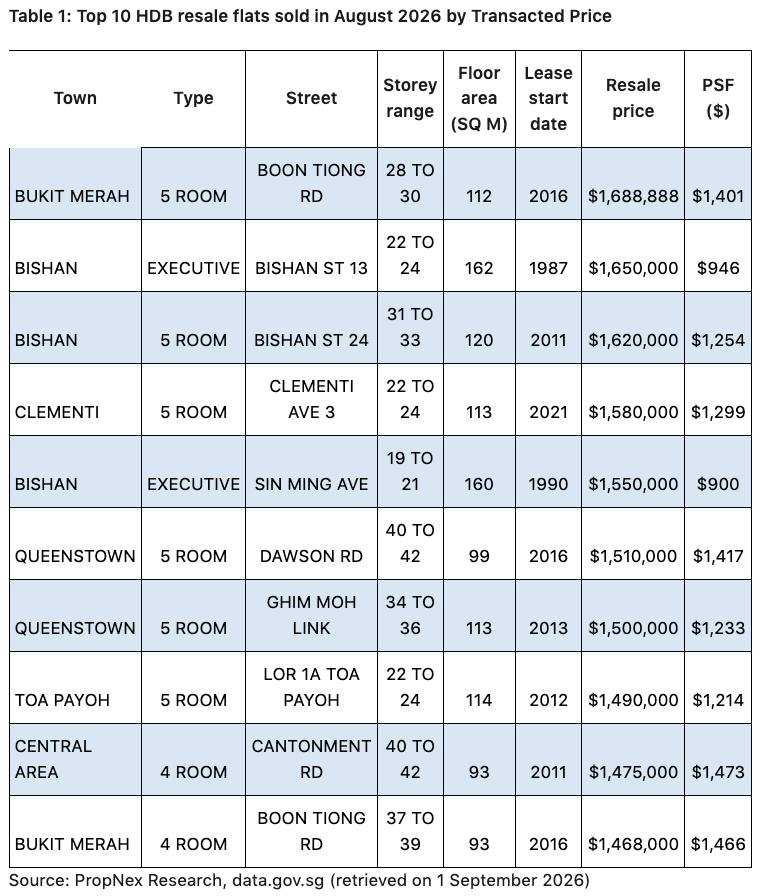
August’s highest transaction illustrates this well.
A five-room flat at Tiong Bahru View sold for $1,688,888. It was a high-floor, 1,206 sq ft home with around 88 years of lease remaining and proximity to Tiong Bahru MRT.
The price was not driven by the “Bukit Merah” label alone. The buyer was paying for a package of attributes:
- a relatively young lease
- a large five-room layout
- a high-floor position
- MRT accessibility
- a central and established location
- limited comparable alternatives
The same principle applies outside mature estates. Seven-figure transactions are appearing across a wider range of towns, but this does not mean the old distinction between mature and non-mature estates has become irrelevant.
It means exceptional homes can create their own premium within a local market.
For example, the highest non-mature-estate transaction in August was $1.25 million for an executive flat in Woodlands. A large, scarce executive layout can attract a very different buyer from a standard four-room flat in the same town.
Town averages are useful for orientation. Actual buyers compare far more specifically: block, age, floor, facing, layout, renovation, walking distance, nearby schools, alternative listings and the monthly instalment at the final purchase price.
Be careful when interpreting the rise in executive-flat prices
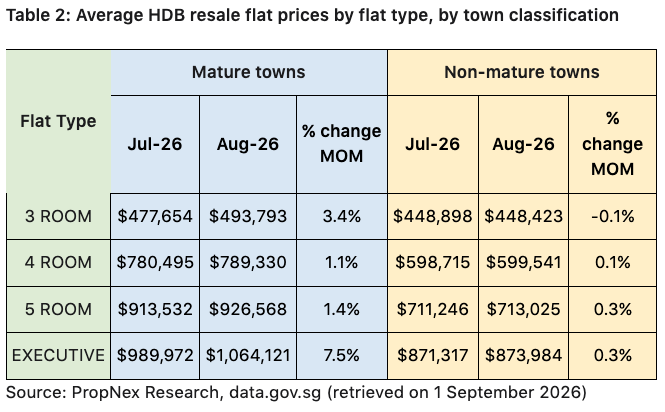
Executive flats in mature towns recorded a 7.5% month-on-month increase, bringing the average transacted price to approximately $1,064,121 in August.
At first glance, this may suggest that the value of every executive flat has risen significantly. However, the increase was partly influenced by a concentration of higher-priced transactions during the month.
There is still a meaningful demand story here. Many buyers value the space offered by executive apartments and maisonettes, especially because equivalent-sized private homes can cost substantially more.
However, the future buyer pool is not unlimited. Older executive flats may have large layouts but shorter remaining leases, higher renovation costs and financing constraints for future buyers. The right question is not only whether the home feels spacious today, but whether the next buyer will still find the price, lease and monthly commitment acceptable.
Space creates appeal. Entry price determines whether that appeal becomes protection or risk.
Will removing the 15-month wait-out period push prices higher?
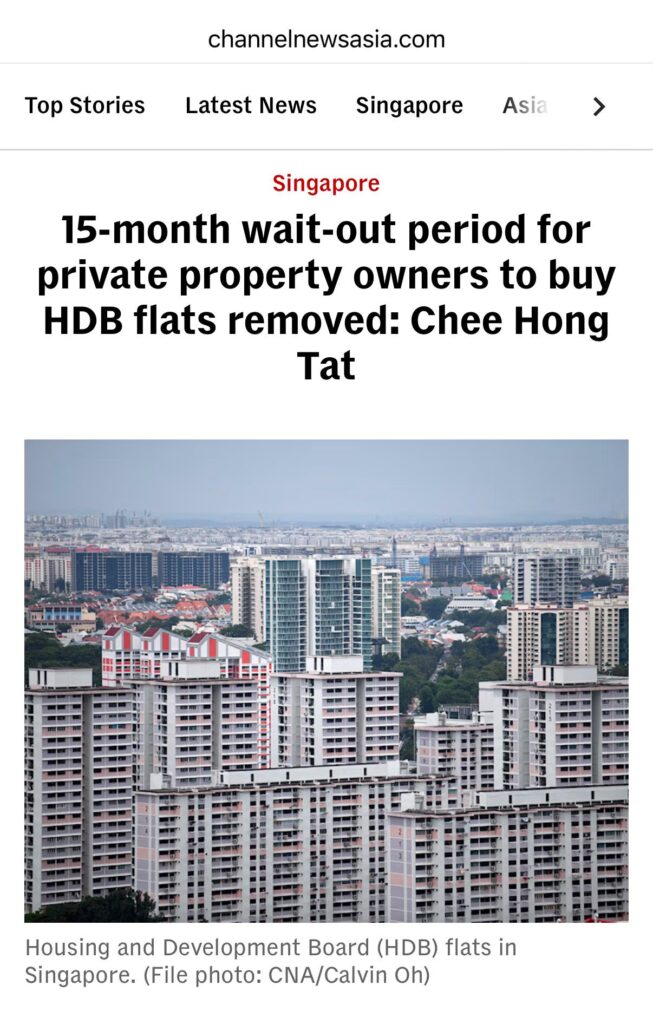
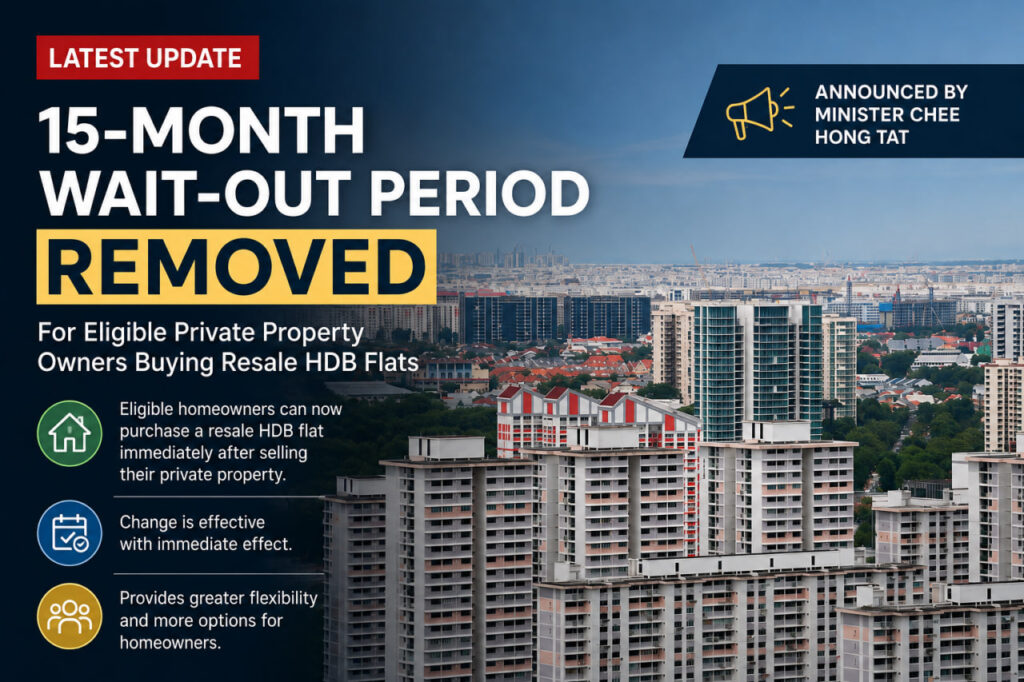
At the end of July, the Government removed the 15-month wait-out period for private property owners and former owners buying a non-subsidised HDB resale flat without an HDB housing loan.
This potentially widens the buyer pool, especially for larger and well-located flats that may appeal to private homeowners who want to right-size.
But we should not overstate its impact on August’s record.
Resale figures are based on registration dates, and some transactions registered in August may have been negotiated before the policy was removed. It will take several months before we can properly assess how much additional demand enters the market, which flat types these buyers prefer and whether that demand changes prices or simply supports transaction volume.
The policy change also does not remove every restriction. Buyers seeking subsidised housing, CPF housing grants, an HDB housing loan or a new executive condominium generally remain subject to a 30-month wait after disposing of private property. Private property must also be disposed of within six months of completing the HDB resale purchase.
For homeowners, the sensible takeaway is not that a new wave of cash-rich buyers will definitely push prices up. It is that the potential buyer pool for certain resale flats has widened, and sellers should watch what these buyers actually choose.
What HDB sellers should do now

If you are thinking of selling, do not start with the highest transaction in your town. Start with the closest alternatives a buyer will see.
1. Build the correct comparison set
Compare transactions and active listings by flat type, remaining lease, floor range, size, layout and walking distance to key amenities. A nearby record can be irrelevant if the product is materially different.
2. Identify the likely buyer before setting the price
A young family, an HDB upgrader and a private homeowner who is right-sizing will value different things. Your marketing and pricing should reflect the buyer most likely to appreciate what your home offers.
3. Separate an attractive asking price from a defensible selling price
An ambitious asking price may generate attention, but buyers still need to justify the purchase against recent transactions, valuation, financing and competing homes. The strongest pricing strategy creates competition without pushing the property outside the realistic search range.
4. Plan the next move before celebrating the sale price
A higher selling price is useful only if the next home, financing, CPF use, temporary accommodation and timeline also work. The goal is not simply to sell high. It is to improve your overall position after the move.
What HDB buyers should do now
Buyers should not let record headlines create unnecessary urgency.
1. Decide which premiums are worth paying
A high floor, young lease, rare layout or short walk to the MRT can justify a premium. But quantify it. Compare what the same budget buys one or two streets away, in a lower-floor unit or in a slightly older project.
2. Check whether the feature will matter to the next buyer
Your own preferences matter, but resale demand matters too. If you pay more for a feature today, ask whether a sufficiently large buyer pool is likely to value it when you eventually sell.
3. Do not confuse scarcity with any price being safe
A rare home can remain desirable and still be overpriced. Good property selection and good price discipline must work together.
4. Protect your future options
Consider remaining lease, financing, renovation cost, family plans and the likely holding period. The best home is not necessarily the most impressive one you can afford. It is the one that meets your needs without leaving your future buyer with too many reasons to choose something else.
Our takeaway: the HDB market is becoming more selective
August’s record does not tell us that every HDB flat is racing towards $1 million.
It tells us that buyers will stretch for a small group of homes they perceive as difficult to replace, even while the broader resale market remains stable.
That is why we do not analyse a home using one headline, one town average or one record transaction. We look at the actual buyer pool, competing supply, affordability, layout, lease, price gap and what the next buyer is likely to compare.
For sellers, this helps determine whether the market genuinely supports a premium. For buyers, it helps distinguish a good home from a good purchase.
If you are considering a move, we can review your property and next-step options together: what buyers are likely to value, where the competition is coming from, what price is defensible and how the decision affects your longer-term position.