For the past few years, many property buyers have been asking the same question:
Why buy in the Core Central Region when an RCR new launch is already so expensive?
It was a fair question.
As new launch prices outside the city climbed, the price difference between the CCR and RCR became increasingly narrow. At one point, some buyers felt that city-fringe projects were offering better value because they were newer, more accessible to HDB upgraders and easier to understand.
But the latest numbers suggest that the market may be shifting again.
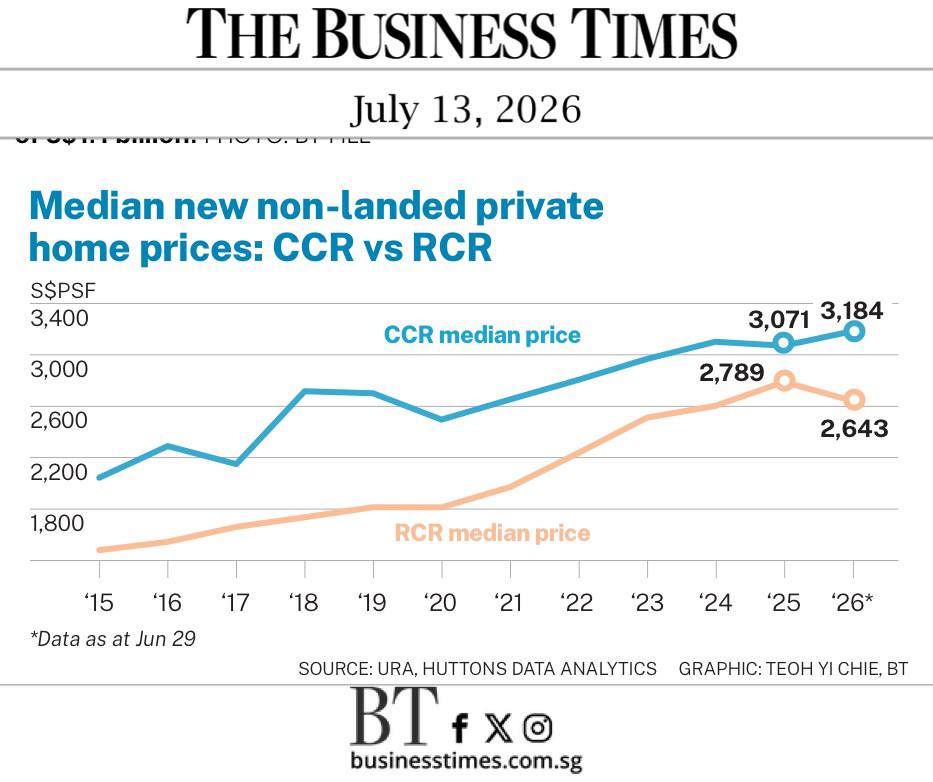
According to data published by The Business Times, the median price of new non-landed private homes in 2026 stood at approximately:
- CCR: $3,184 psf
- RCR: $2,643 psf
That is a gap of around $541 psf.
In 2025, the difference was much smaller:
- CCR: $3,071 psf
- RCR: $2,789 psf
- Difference: approximately $282 psf
In other words, the price gap between the CCR and RCR has almost doubled within a year.
The immediate reaction may be:
“Does this mean CCR properties are becoming too expensive?”
Not necessarily.
The more useful question is:
Why is the gap widening, and what does it tell us about buyer behaviour?
First, Median Prices Do Not Tell the Full Story

Before drawing any conclusion, we need to understand what a median price represents.
New launch prices are affected by the type of projects launched during that particular year.
For example, if more premium projects are launched in the CCR, the median price may rise. Similarly, if the RCR launches during the year are located in less expensive areas, or developers release a different mix of units, the median price may fall.
So we should not look at this chart and immediately assume that every CCR property increased while every RCR property dropped.
The chart is not a direct price index.
However, it does reveal something important about how the different market segments are being positioned.
The RCR Was Once Seen as the “Value” Segment

Historically, many buyers viewed the RCR as a comfortable middle ground.
It offered:
- Better connectivity than most OCR locations
- Lower prices than the CCR
- Strong demand from HDB upgraders
- A wider pool of own-stay buyers
- Relatively manageable entry prices
But as land prices increased and developers paid more for city-fringe sites, new launch prices in the RCR started climbing quickly.
By 2025, the RCR median had reached approximately $2,789 psf.
At the same time, the CCR median was around $3,071 psf.
The difference was only about $282 psf.
At that point, some buyers started asking:
“If I am already paying close to $2,800 psf in the RCR, should I simply top up and enter the CCR?”
This is where buyer psychology begins to change.
Once the price gap becomes too narrow, buyers stop comparing projects only within the same region. They begin comparing across regions.
A buyer considering a city-fringe property may start looking at:
- Older freehold properties in the CCR
- Smaller units in stronger central locations
- Projects closer to established lifestyle areas
- Developments with a more limited future supply
The moment this happens, the RCR project is no longer competing only against nearby developments.
It is also competing against the CCR.
The Widening Gap May Actually Help Restore Market Segmentation

At first glance, a wider CCR-RCR price gap may appear negative.
But from a market-structure perspective, it may be healthier.
Different regions need to serve different buyer groups.
The CCR generally attracts buyers who value:
- Centrality
- Prestige
- International tenant demand
- Established neighbourhoods
- Scarcity of prime land
- Long-term wealth preservation
The RCR typically depends more heavily on:
- HDB upgraders
- Local families
- Own-stay demand
- Affordability
- School and transport considerations
- Practical access to employment areas
When the pricing between the two regions becomes too similar, buyers may struggle to understand the value proposition.
A meaningful price difference allows each region to appeal to its natural buyer pool again.
The CCR can remain the premium segment.
The RCR can return to being the bridge between mass-market housing and prime private property.
But Does the Lower RCR Median Mean RCR Projects Are Becoming Cheaper?

Not automatically.
This is where project-level analysis becomes important.
A regional median does not tell you whether a particular development is attractively priced.
A project at $2,600 psf may still be expensive if:
- Nearby resale properties are trading far below it
- Future supply in the area is high
- The unit size pushes the total price beyond upgrader affordability
- There is no strong transformation story
- Future buyers have many competing options
At the same time, another project at $2,800 psf may still make sense if:
- Its land cost provides some pricing protection
- The surrounding resale market is already close to its entry price
- The area has a large and financially capable upgrader pool
- Future competing supply is limited
- The project offers a product that is difficult to replace
This is why focusing only on PSF can be misleading.
The more important question is:
Would real buyers still want this property when you are ready to sell?
The Future Buyer Pool Matters More Than the Region Label

A property does not perform simply because it is located in the CCR, RCR or OCR.
It performs when there is a future group of buyers who can afford it and genuinely want it.
For an RCR development, we would study whether the future buyer pool includes:
- HDB upgraders from nearby mature estates
- Families upgrading from older condominiums
- Buyers priced out of the CCR
- Owners who want to stay near their parents or children
- Tenants who eventually become owners
- Buyers attracted by future transformation
For a CCR development, the buyer pool may be very different:
- High-income local professionals
- Investors
- Permanent residents
- New citizens
- Buyers seeking a second-generation wealth asset
- Owners downsizing from landed homes
The location label matters.
But the depth of the future buyer pool matters more.
What Buyers Should Pay Attention to Now
Instead of asking whether the CCR or RCR is “better”, buyers should compare projects through a few practical questions.
1. Is the price gap justified?
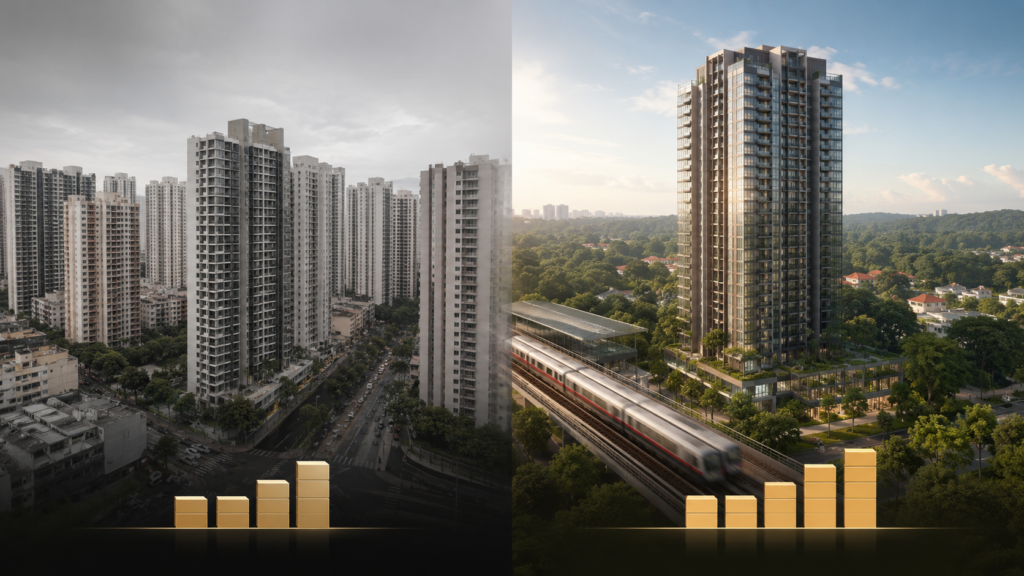
If an RCR project is priced close to a CCR alternative, what is it offering in return?
Is it newer?
Closer to an MRT station?
Better suited for families?
Located near stronger schools?
More affordable in terms of total quantum?
There must be a reason for the pricing.
2. Who will buy from you later?

A three-bedroom unit may look attractive today, but will the future target buyer be able to afford it?
If the eventual resale price reaches $3 million, is the surrounding upgrader population financially capable of supporting that price?
3. What is coming next?
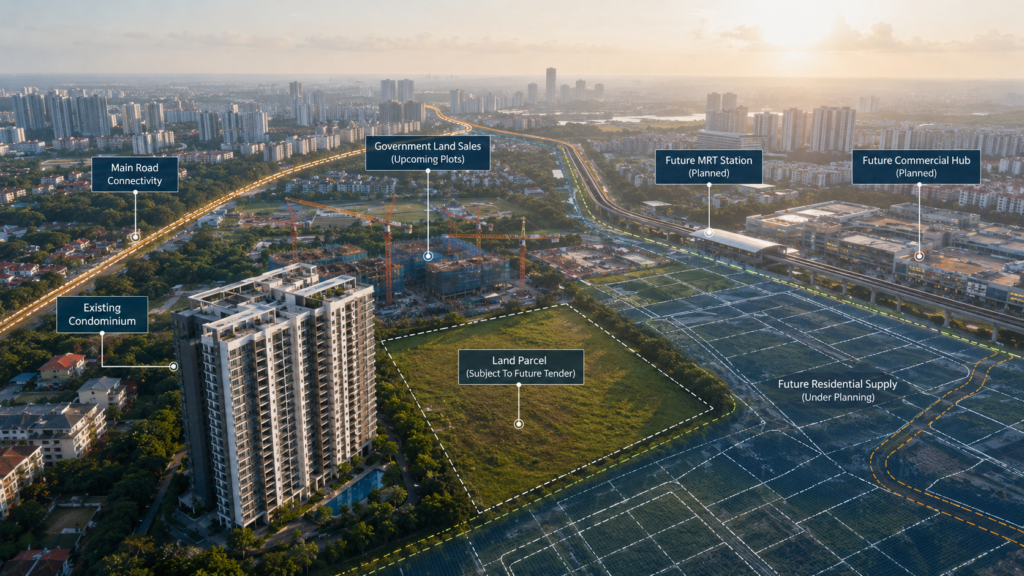
The next land parcel can affect your property more than the current showflat crowd.
A higher future land bid may help create a pricing floor.
But a wave of competing projects may also give buyers too many choices.
4. Is the entry price supported by the resale market?
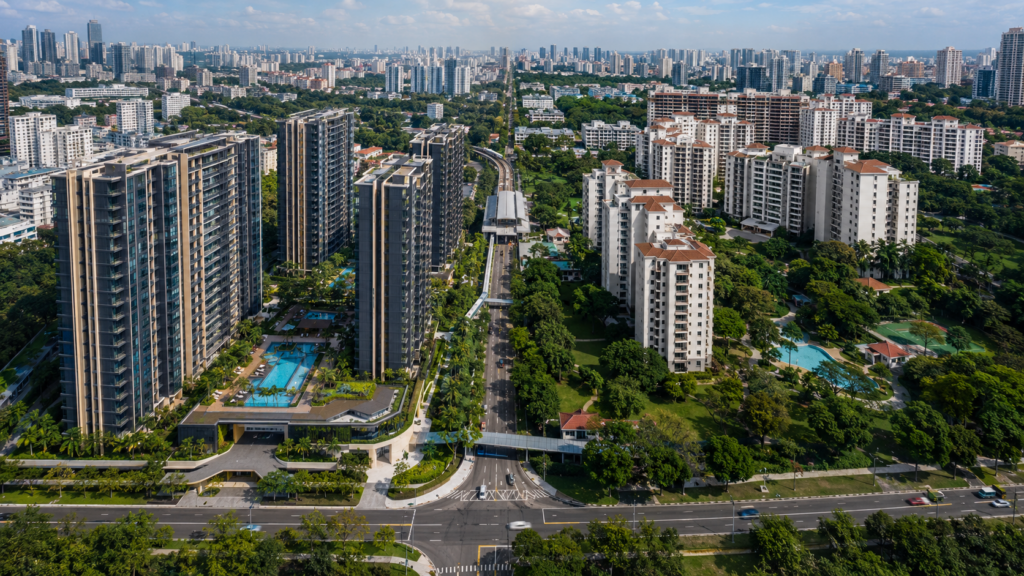
A large gap between new launch and resale prices is not always bad.
But the buyer should understand what needs to happen for the surrounding market to catch up.
5. Are you buying the region or the actual property?
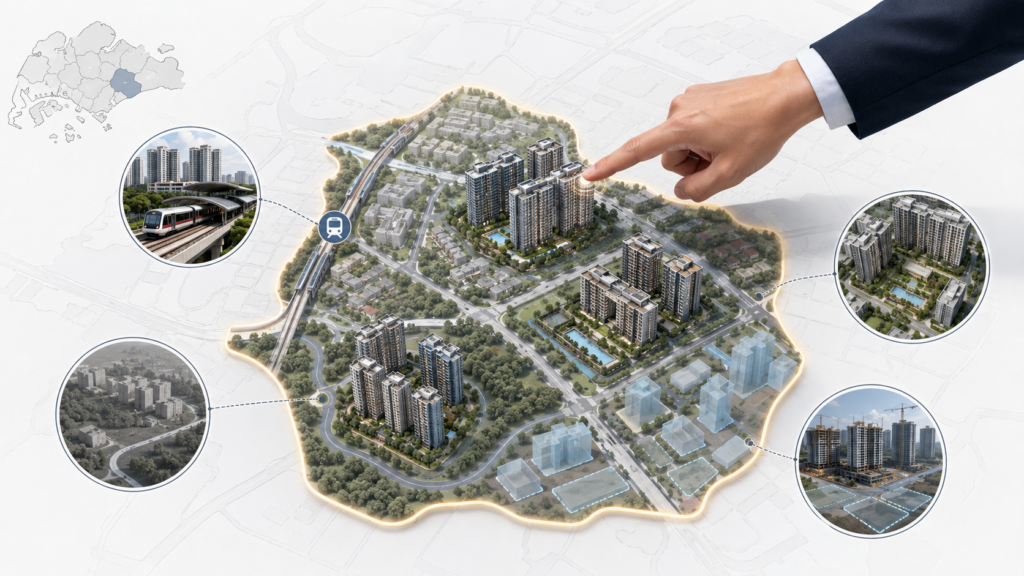
Two developments in the same region can perform very differently.
One may have stronger layouts, lower entry prices and a wider resale audience.
The other may struggle despite having the same CCR or RCR label.
Our Take

The widening gap between CCR and RCR median new launch prices is worth watching.
But it should not be interpreted as a simple signal that one region is rising while the other is weakening.
What it may be showing is a gradual return to clearer market segmentation.
The CCR is re-establishing its premium.
The RCR may be moving back towards a more affordable position relative to the city centre.
For buyers, this creates opportunities.
But only when the entry price, unit type and future buyer pool are aligned.
The mistake is to buy simply because a project appears cheaper than another region.
The better approach is to ask:
What is creating demand here, and will that demand still exist when I need to exit?
That is usually where the real answer is found.
At Matthew & Dillon, we do not start by asking which project is the most popular.
We look at the land cost, surrounding prices, affordability, future supply and the buyers who may eventually purchase the unit from you.
Because a good property decision is not only about getting into the market.
It is also about making sure there is a clear path out.
Not urgent, but if you are comparing a CCR and RCR project, we are happy to share the framework we use to identify where the safer entry points may be.
If you’d like, feel free to reach out to us for a casual discussion or customised planning session. Sometimes one proper conversation can save years of regret later on.
📩 Book a 15-minute call (Zoom or coffee — your choice)
Let’s build clarity around your next move — not anxiety.
CLICK HERE 👉 QUICK 15-MIN CLARITY SESSION
Wondering if it’s the right time to buy, sell, or wait it out?
These decisions can be tough, and there isn’t a one-size-fits-all answer.
But don’t worry, that’s where we come in!
At Let’s Talk Property, we are here to provide clarity to you and guide you step-by-step in your real estate journey!
Whether you’re a first-time buyer or a seasoned investor, we hope to partner with you to create a clear plan that’s tailored to your unique needs and provide objective guidance to help you make the best real estate decision.
So, if you’re looking to buy, sell, or just want to chat about your real estate options, we’re here for you!
With our extensive on-the-ground experience, you can trust us to provide a top-notch real estate experience that’s both informative and stress-free.
Do contact us for a sharing session!
Best Regards,
Let’s Talk Property
Dillon @ 9389 1992
P.S. With so much UNCERTAINTY, Should you BUY, SELL or WAIT?
Find out more by clicking HERE
LIKE OR SHARE OUR FACEBOOK PAGE 🙂