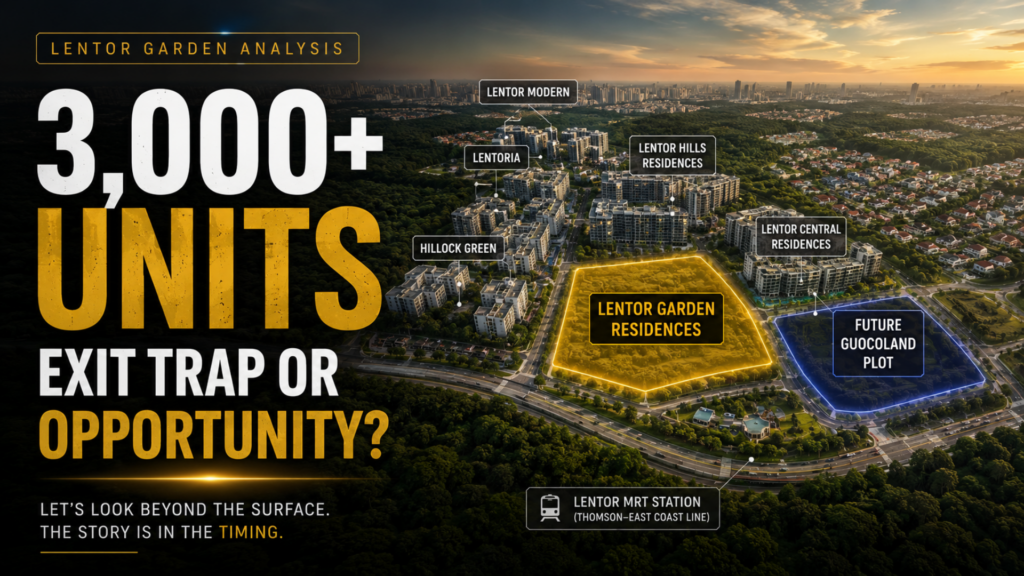
Proposed changes could make collective sales easier for ageing developments. But buying or holding a property purely for en bloc potential may still be the wrong way to plan.
When news of lower en bloc consent thresholds appeared, it was easy to arrive at one quick conclusion:
Older condominiums may now have a better chance of being sold en bloc.
That is true to a certain extent.
But for homeowners, buyers and sellers, the more important question is not simply:
“Can this development go en bloc?”
It is:
“How should this possibility affect my property plan?”
That is where the answer becomes much more personal.
What Has Been Proposed?
On 4 August 2026, the Ministry of Law introduced the Land Titles (Strata) (Amendment) Bill for its First Reading in Parliament.
Under the proposed changes, the consent thresholds for collective sales would be:
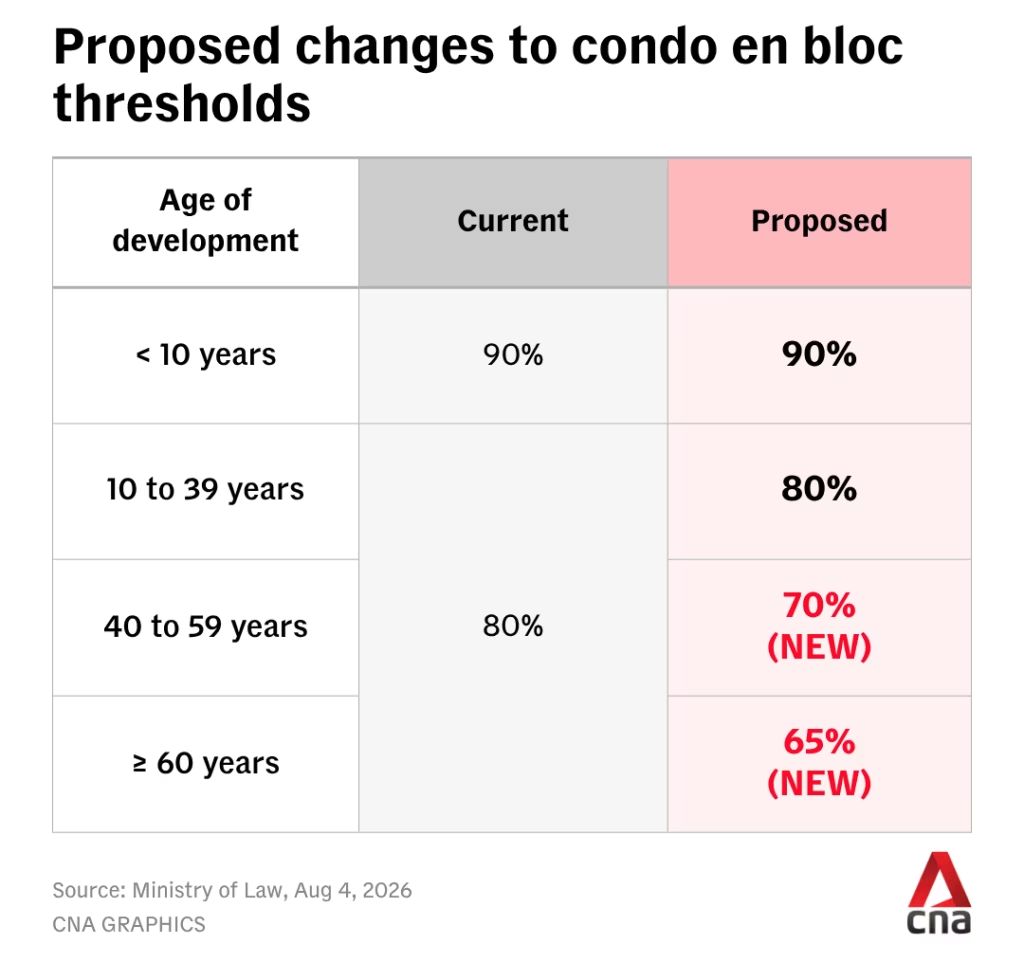
The intention is to give ageing developments a more practical redevelopment option, especially when their maintenance, repair and upgrading needs become increasingly costly.
The Bill also proposes stronger safeguards for owners who do not support a sale. These include requiring at least 35% support to initiate an en bloc attempt, reducing the signature collection period from 12 months to six months, and extending the restriction period after a failed attempt from two years to three years.
One important point: these are proposed amendments. They have not yet become law. The Bill must still be debated and passed, with the changes taking effect at a later date.
Lower Consent Does Not Mean an En Bloc Sale Is Guaranteed
This is the part many homeowners may miss.
The consent threshold is only one obstacle in an en bloc exercise. Lowering it could make owner agreement easier, but a successful sale still requires a developer who is willing to buy the site.
Developers will continue to study factors such as:
- The reserve price and resulting land cost
- The size and complexity of the site
- The number of new units that can be built
- Planning restrictions and potential intensification
- Construction and financing costs
- Additional Buyer’s Stamp Duty obligations
- Competition from Government Land Sales sites
- Expected demand and achievable selling prices for the future project
In other words, an older development can obtain the necessary consent and still fail to attract a buyer if the numbers do not make sense.
This is why we would be careful about describing an old condo as an “en bloc opportunity” based only on its age.
What Does This Mean for Buyers?

Some buyers may now look at older condominiums and think:
“If I buy now, perhaps I can enjoy the large space and wait for an en bloc payout.”
It sounds attractive. But an en bloc should be treated as a possible bonus, not the main reason for buying.
Before purchasing an older condo, we would still ask:
1. Would You Be Happy to Own It If No En Bloc Happens?
This is the most important test.
The property should still make sense based on its location, layout, condition, remaining lease, maintenance needs and future resale demand.
If the investment only works when an en bloc happens, the buyer may be taking on more uncertainty than expected.
2. Who Will Buy the Unit From You Later?
An older condo may offer more space for the same budget, but future buyers will also compare it against newer resale projects and new launches.
As the development ages, concerns about financing, lease decay, maintenance costs and renovation may narrow the future buyer pool.
The question is not just whether the home feels like good value today. It is whether another buyer is likely to see that value five or ten years later.
3. Is the Site Actually Attractive to Developers?
Two developments of the same age can have very different redevelopment potential.
A well-located site near an MRT station with redevelopment potential may be more attractive than another old development with a high reserve price, limited plot-ratio upside or a very large acquisition quantum.
Age helps determine the proposed consent threshold. It does not determine the value of the site to a developer.
4. Can You Carry the Property Comfortably While Waiting?
Collective sales can take years, face objections, fail to find a buyer or be attempted more than once.
Your financial plan should therefore work without depending on a specific en bloc timeline.
What Does This Mean for Existing Owners and Sellers?

For owners of condos above 40 years old, the proposal may create another viable path to consider. But it does not automatically mean that holding on is always better than selling now.
Your decision should still depend on your own timeline.
If You Are Thinking of Holding
Study whether the development has realistic en bloc potential, not just discussion among residents.
Look at the site, plot ratio, tenure, reserve price expectations, surrounding land transactions, developer appetite and previous collective sale attempts.
You should also be comfortable with ongoing maintenance costs and the possibility that no sale takes place.
If You Are Thinking of Selling
Do not assume that every buyer will pay a large premium simply because the threshold may be lower.
Some buyers may value the optionality. Others may be worried about uncertainty, an ageing property or having to move if a collective sale succeeds.
The way the property is positioned matters. Sellers need to understand which buyer profile is most likely to appreciate the home today, independent of any future en bloc.
If an En Bloc Exercise Has Started
The decision becomes more complex than comparing the proposed sale proceeds with your current market value.
Owners should also consider:
- Whether the proceeds are enough to purchase a suitable replacement home
- Buyer’s Stamp Duty, legal fees, renovation and moving costs
- The timing between receiving the proceeds and buying the next property
- Whether they can obtain a similar location, size and tenure
- Financing eligibility at their current age and income
- The emotional impact of leaving a long-time family home
A large headline payout may feel attractive, but the real outcome is what remains after replacing the home and accounting for all related costs.
The Wider Signal Behind the Policy
The proposal appears to be part of a broader direction towards rejuvenating ageing estates and using land more efficiently.
Just one week before the Bill was introduced, the Government revised the ABSD remission timelines for developers purchasing large en bloc sites. Qualifying sites that can yield 700 to 1,399 homes may receive up to six years to complete and sell all units, while sites yielding at least 1,400 homes may receive up to seven years, subject to conditions.
Put together, these moves address both sides of the collective sale process:
- Making it more practical for owners of ageing developments to obtain consent
- Giving developers more time to undertake large and complex redevelopment projects
This may improve the feasibility of selected sites. But it is unlikely to make every old condominium an en bloc target.
Developers will still be selective, and realistic pricing will remain critical.
Our Perspective

Policy changes can open new possibilities, but they should not replace proper planning.
For buyers, the safest approach is to purchase a property that still works even without an en bloc.
For sellers, the right decision depends on more than waiting for a possible payout. Your next home, cash flow, financing and family timeline may matter more.
And for owners already facing a collective sale discussion, the key question is not simply whether the offer looks attractive.
It is whether the entire move leaves you in a better position afterwards.
That is the role we believe a property adviser should play: not predicting whether an en bloc will happen, but helping you understand the possibilities, risks and next steps before making a major decision.
If you own an older condominium or are considering buying one, we are happy to study the development with you and see how it fits into your wider property plan.
📩 Book a 15-minute call (Zoom or coffee — your choice)
Let’s build clarity around your next move — not anxiety.
CLICK HERE 👉 QUICK 15-MIN CLARITY SESSION
Wondering if it’s the right time to buy, sell, or wait it out?
These decisions can be tough, and there isn’t a one-size-fits-all answer.
But don’t worry, that’s where we come in!
At Let’s Talk Property, we are here to provide clarity to you and guide you step-by-step in your real estate journey!
Whether you’re a first-time buyer or a seasoned investor, we hope to partner with you to create a clear plan that’s tailored to your unique needs and provide objective guidance to help you make the best real estate decision.
So, if you’re looking to buy, sell, or just want to chat about your real estate options, we’re here for you!
With our extensive on-the-ground experience, you can trust us to provide a top-notch real estate experience that’s both informative and stress-free.
Do contact us for a sharing session!
Best Regards,
Let’s Talk Property
Dillon @ 9389 1992
P.S. With so much UNCERTAINTY, Should you BUY, SELL or WAIT?
Find out more by clicking HERE
LIKE OR SHARE OUR FACEBOOK PAGE 🙂